» » » » Мир меняется — ребенок готов - Това Кляйн
Мир меняется — ребенок готов - Това Кляйн

На нашем литературном портале можно бесплатно читать книгу Мир меняется — ребенок готов - Това Кляйн, Това Кляйн . Жанр: Психология. Онлайн библиотека дает возможность прочитать весь текст и даже без регистрации и СМС подтверждения на нашем литературном портале litmir.org.
Мир меняется — ребенок готов - Това Кляйн
Название: Мир меняется — ребенок готов
Дата добавления: 9 март 2026
Количество просмотров: 1
Читать онлайн

Внимание! Книга может содержать контент только для совершеннолетних. Для несовершеннолетних просмотр данного контента СТРОГО ЗАПРЕЩЕН! Если в книге присутствует наличие пропаганды ЛГБТ и другого, запрещенного контента - просьба написать на почту readbookfedya@gmail.com для удаления материала

Мир меняется — ребенок готов читать книгу онлайн

Мир меняется — ребенок готов - читать бесплатно онлайн , автор Това Кляйн

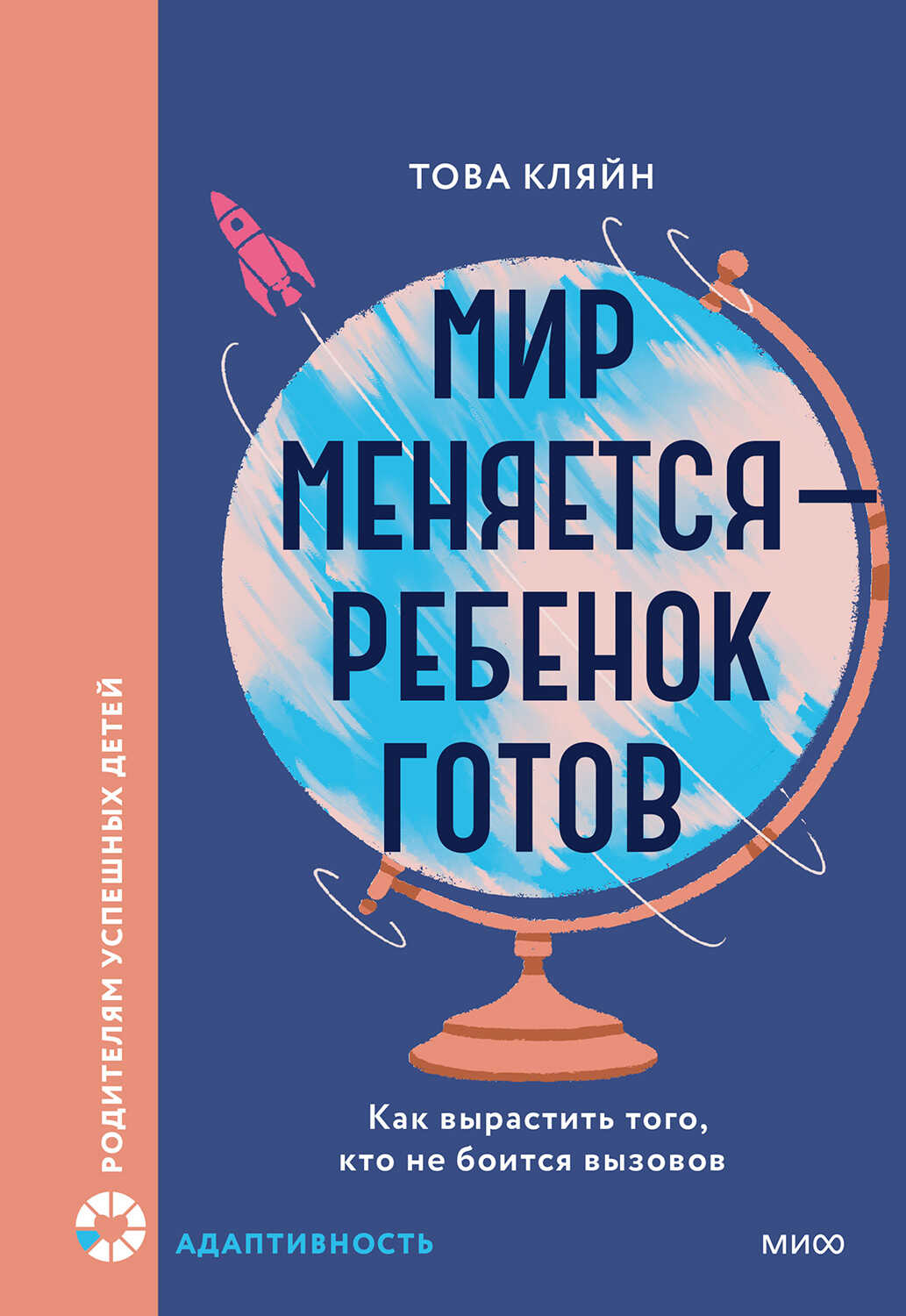
Это практическая книга о том, как вырастить стрессоустойчивого ребенка в эпоху неопределенности. Това Кляйн — профессор психологии в колледже Барнард Колумбийского университета и директор Центра развития тоддлеров колледжа Барнард — всемирно признанного исследовательского и образовательного центра. В этой книге она показывает: адаптивность и устойчивость к стрессу формируются не в испытаниях, а в ежедневных отношениях — когда взрослый становится ребенку якорем и контейнером для его чувств. Вы получите понятную систему и конкретные стратегии воспитания для детей любого возраста — от дошкольника до подростка.
1 ... 56 57 58 59 60 ВПЕРЕД
Перейти на страницу:
Li, “The evolution of the concept of stress and the framework of the stress system”, Cell Stress 5, no. 6 (April 26, 2021): 76–85. doi: 10.15698/cst2021.06.250. PMID: 34124582; PMCID: PMC8166217.

32

R. M. Sullivan, “The neurobiology of attachment to nurturing and abusive caregivers”, Hastings Law Journal 63, no. 6 (August 2012): 1553–70. PMID: 24049190; PMCID: PMC3774302.

33

Ronald F. Ferguson, Sarah F. Phillips, Jacob F. S. Rowley, and Jocelyn W. Friedlander, The Influence of Teaching Beyond Standardized Test Scores: Engagements, Mindsets and Agency (Cambridge, MA: Harvard University: The Achievement Gap Initiative, 2015).

34

Sofie Kuppens, Eva Ceulemans. “Parenting styles: A closer look at a well-known concept”, Journal of Child and Family Studies 28, no. 1 (2019): 168–81. https://doi.org/10.1007/s10826-018-1242-x.

35

Sofie Kuppens, Eva Ceulemans. “Parenting styles: A closer look at a well-known concept”, Journal of Child and Family Studies 28, no. 1 (2019): 168–81. https://doi.org/10.1007/s10826-018-1242-x.

36

Herbert P. Ginsburg and Sylvia Opper: Piaget’s Theory of Intellectual Development, 3rd Edition (Pearson, 1987).

37

Tovah P. Klein, “Seeing the Child’s World: The essence of Anji True Play that can be transported to worldwide locations”, True Play Conference, Anji, China (May, 2019) www.anjiplay.com.

38

133 Mogel continues: Wendy Mogel, The Blessing of a B Minus: Using Jewish Teachings to Raise Resilient Teenagers (New York: Scribner, 2011), 97.

39

R. Ames, “Help-seeking and achievement orientation: Perspectives from attribution theory”, in New Directions in Helping, vol. 2, eds. B. DePaulo, A. Nadler, and J. D. Fisher (New York: Academic Press, 1983), 165–86.

40

Kathy T. Do, Ethan M. McCormick, and Eva H. Telzer, “The neural development of prosocial behavior from childhood to adolescence”, Social Cognitive and Affective Neuroscience 14, no. 2 (February 2019): 129–39.

41

Matthew D. Lieberman, Social: Why Our Brains Are Wired to Connect (New York: Crown Publishers, 2013).

42

Diane Poulin-Dubois, “Theory of mind development: State of the science and future directions”, Progress in Brain Research 254, ch. 7 (Elsevier: 2020), 141–66.

43

Joseph P. Allen, Rachel K. Narr, Jessica Kansky, and David E. Szwedo, “Adolescent peer relationship qualities as predictors of long-term romantic life satisfaction”, Child Development 91, no. 1 (2020): 327–40; Joseph P. Allen, Maryfrances Porter, Christy McFarland, Kathleen Boykin McElhaney, and Penny Marsh, “The relation of attachment security to adolescents’ paternal and peer relationships, depression, and externalizing behavior”, Child Development 78, no. 4 (2007): 1222–39.

44

Joseph P. Allen, Rachel K. Narr, Jessica Kansky, and David E. Szwedo, “Adolescent peer relationship qualities as predictors of long-term romantic life satisfaction”, Child Development 91, no. 1 (2020): 327–40; Joseph P. Allen, Maryfrances Porter, Christy McFarland, Kathleen Boykin McElhaney, and Penny Marsh, “The relation of attachment security to adolescents’ paternal and peer relationships, depression, and externalizing behavior”, Child Development 78, no. 4 (2007): 1222–39.

45

Office of the Surgeon General, Our Epidemic of Loneliness and Isolation: The U.S. Surgeon General’s Advisory on the Healing Effects of Social Connection and Community (Washington, DC: US Department of Health and Human Services, 2023).

46

D. W. Winnicott, The Child, the Family, and the Outside World (Addison-Wesley Publishers, 1964).

47

Lisa Matricciani, Catherine Paquet, Barbara Galland, Michelle Short, and Tim Olds, “Children’s sleep and health: A metareview”, Sleep Medicine Reviews 46 (2019), 136–50, https://doi.org/10.1016/j.smrv.2019.04.011.

48

Marcia P. Jimenez, Nicole V. DeVille, Elise Elliott, Jessica E. Schiff, Grete E. Wilt, Jaime E. Hart, and Peter James, “Associations between nature exposure and health: A review of the evidence”. International Journal of Environmental Research and Public Health 18, no. 9 (2021): 1–19, http://dx.doi.org/10.3390/ijerph18094790.

49

Kristin Homan and Lisa Hosack, “Gratitude and the self: Amplifying the good within”, Journal of Human Behavior in the Social Environment 29. no. 7 (2019): 1–13, https://doi.org/10.1080/10911359.2019.1630345.

50

Geyze Diniz, Ligia Korkes, Luca Schiliró Tristão, Rosangela Pelegrini, Patrícia Lacerda Bellodi, and Wanderley Marques Bernardo, “The effects of gratitude interventions: a systematic review and meta-analysis”, Einstein (São Paulo) 21 (August 2023).

51

Shelley H. Carson and Ellen J. Langer, “Mindful practice for clinicians and patients”, in Handbook of Primary Care Psychology (2004): 173–83. Oxford University Press.

52

Shelley H. Carson and Ellen J. Langer, “Mindful practice for clinicians and patients”, in Handbook of Primary Care Psychology (2004): 173–83. Oxford University Press.

53

Richard J. Davidson and Alfred W. Kazniak, “Conceptual and methodological issues in research on mindfulness and meditation”, American Psychologist 70, no. 7 (October 2015): 581–92.

1 ... 56 57 58 59 60 ВПЕРЕД
Перейти на страницу:
Комментариев (0)