» » » » Оливер Стоун - Нерассказанная история США

Оливер Стоун - Нерассказанная история США

На нашем литературном портале можно бесплатно читать книгу Оливер Стоун - Нерассказанная история США, Оливер Стоун . Жанр: Биографии и Мемуары. Онлайн библиотека дает возможность прочитать весь текст и даже без регистрации и СМС подтверждения на нашем литературном портале litmir.org.
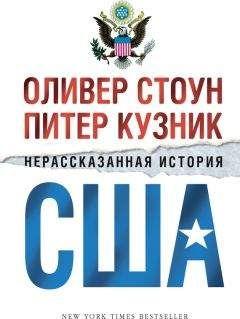
Оливер Стоун - Нерассказанная история США
Название: Нерассказанная история США
ISBN: -
Год: -
Дата добавления: 3 февраль 2019
Количество просмотров: 326
Читать онлайн

Внимание! Книга может содержать контент только для совершеннолетних. Для несовершеннолетних просмотр данного контента СТРОГО ЗАПРЕЩЕН! Если в книге присутствует наличие пропаганды ЛГБТ и другого, запрещенного контента - просьба написать на почту readbookfedya@gmail.com для удаления материала

Нерассказанная история США читать книгу онлайн

Нерассказанная история США - читать бесплатно онлайн , автор Оливер Стоун
Мы не хотим заново пересказывать всю историю нашей страны – это попросту невозможно. Мы стремимся пролить свет на то, что мы считаем предательством идей, легших в основу ее исторической миссии, – поскольку нам кажется, что все еще есть надежда исправить эти ошибки до того, как XXI век окончательно вступит в свои права. Нас глубоко беспокоит курс, взятый США в последнее время.Почему наша страна размещает во всех уголках земного шара свои военные базы, общее количество которых, по некоторым подсчетам, перевалило за тысячу? Почему США тратят на свои вооруженные силы больше денег, чем все остальные страны, вместе взятые? Почему наше государство по-прежнему содержит огромный арсенал ядерного оружия, большая часть которого находится в постоянной боевой готовности, хотя, по сути, ни одна страна сегодня не представляет для нас непосредственной угрозы?Почему ничтожному меньшинству состоятельных американцев позволено оказывать такое мощное влияние на внутреннюю и внешнюю политику США и СМИ, в то время как широкие народные массы страдают от снижения уровня жизни, а их голос в политике слышен все слабее? Почему американцы вынуждены мириться с постоянным надзором, вмешательством государства в их личные дела, попранием гражданских свобод и утратой права на частную жизнь?Это повергло бы в ужас отцов-основателей и прежние поколения американцев. Почему в нашей стране именно те, кем движет жадность и узколобый эгоизм, правят теми, кто ратует за такие общественные ценности, как доброта, щедрость, сочувствие к окружающим, общность интересов и верность общенародным идеалам?И это лишь малая толика тех вопросов, которые мы зададим на страницах этой книги. И хотя мы не надеемся, что сумеем найти ответы на все из них, мы все же постараемся представить исторические факты так, чтобы читатели смогли самостоятельно углубиться в изучение заинтересовавших их вопросов.В истории Американской империи мало хорошего. Но необходимо честно и открыто говорить о ней, если мы хотим, чтобы Соединенные Штаты когда-нибудь отважились пойти на коренные реформы, которые позволят им играть ведущую роль в продвижении человечества вперед, вместо того чтобы всячески тормозить его прогресс.Оливер Стоун, Питер КузникБуктрейлер к этой книге
Перейти на страницу:
Конец ознакомительного фрагментаКупить книгу

Ознакомительная версия. Доступно 35 страниц из 228

117. Whitehead Don, Romeiser John Beals. Beachhead Don: Reporting the War from the European Theater, 1942–1945. – NY: Fordham University Press, 2004. – P. 355–356.

118. Harold Denny. First Link Made Wednesday by Four Americans on Patrol // New York Times. – 1945. – April 28.

119. Leffler Melvyn P. For the Soul of Mankind: The United States, the Soviet Union and the Cold War. – NY: Hill and Wang, 2007. – P. 34.

120. Sulzberger C. L. What the Russians Want – and Why // New York Times. – 1945. – June 10.

121. Russia’s Children / Editorial // Washington Post. – 1945. – January 1.

122. First Lady Gathers Books for Russians // New York Times. – 1945. – July 1.

123. ‘I Am an American’ Is Powerful Password in Poland or Russia // Washington Post. – 1945. – March 4.

124. Gallup George. New Confidence in Russian Aims Shown in Poll // Los Angeles Times. – 1945. – March 11.

125. Leffler Melvyn P. Inside Enemy Archives: The Cold War Reopened // Foreign Affairs. – № 75. – 1996. – P. 123.

126. Werth Alexander. Russia at War. – NY: Dutton, 1964. – P. 768.

127. Kondoyanidi Anita. The Liberating Experience: War Correspondents, Red Army Soldiers, and the Nazi Extermination Camps // Russian Review. – № 69. – 2010. – P.438.

128. Leffler Melvyn P. For the Soul of Mankind: The United States, the Soviet Union and the Cold War. NY: Hill and Wang, 2007. – P. 29.

129. Offner Arnold A. Another Such Victory: President Truman and the Cold War, 1945–1953. – Stanford, CA: Stanford University Press, 2002. – P. 54.

130. America and Russia // Life. – 1945. – July 30. – P. 20.

131. Gardner Lloyd C. Architects of Illusion: Men and Ideas in American Foreign Policy, 1941–1949. – NY: Quadrangle Books, 1970. – P. 58.

Глава 4. Бомба: Трагедия маленького человека

1. Fussell Paul. Thank God for the Atom Bomb: Hiroshima: A Soldier’s View // New Republic. – 1981. – August 26 and 29. – P. 28–30.

2. Sherwood Robert E. Roosevelt and Hopkins: An Intimate History. – NY: Harper & Brothers, 1950. – P. 605.

3. Roger M. Macklis. The Great Radium Scandal // Scientific American. – № 269. – 1993. – P. 94–99; Weart Spencer R. Nuclear Fear: A History of Images. – Cambridge, MA: Harvard University Press, 1988. – P. 50–52.

4. Wells H. G. The World Set Free. – NY: E. P. Dutton, 1914. – P. 152.

5. Bernstein Barton J. Introduction // Toward a Livable World: Leo Szilard and the Crusade for Nuclear Arms Control / Ed. Helen S. Hawkins, G. Allen Greb, and Gertrud Weiss Szilard. – Cambridge, MA: MIT Press, 1987. – P. xxvi.

6. Winkler Allan M. Life Under a Cloud: American Anxiety About the Atom. – NY: Oxford University Press, 1993. – P. 36.

7. Compton Arthur Holly. Atomic Quest: A Personal Narrative. – NY: Oxford University Press, 1956. – P. 49.

8. Bernstein Jeremy. Hans Bethe, Prophet of Energy. – NY: Basic Books, 1980. – P. 73.

9. Davis Nuel P. Lawrence and Oppenheimer. – NY: Da Capo Press, 1986. – P. 130.

10. Compton. Atomic Quest: A Personal Narrative. Op. cit. – P. 128.

11. Lanouette William, Silard Bela. Genius in the Shadows: A Biography of Leo Szilard, the Man Behind the Bomb. – C: University of Chicago Press, 1992. – P. 245.

12. Bird Kai, Sherwin Martin J. American Prometheus: The Triumph and Tragedy of J. Robert Oppenheimer. NY: Vintage Books, 2005. – P. 185.

13. Sherry Michael S. The Rise of American Air Power: The Creation of Armageddon. – New Haven, CT: Yale University Press, 1987. – P. 172, 236.

14. Wallace Henry A. The Price of Free World Victory // Wallace Henry A. The Price of Vision: The Diary of Henry A. Wallace, 1942–1946 / Ed. John Morton Blum. – Boston: Houghton Mifflin, 1973. – P. 636.

15. Brown Anthony Cave. “C”: The Secret Life of Sir Stewart Graham Menzies. – NY: Macmillan, 1987. – P. 481–484; Wallace H. A. Op. cit. – P. 385. В октябре 1945 года Уоллес так писал в своем дневнике о Дале: «Он хороший парень, который мне очень симпатичен как человек, но он, вне всяких сомнений, действует с позиции британской политики, а задачей британской политики, вне всяких сомнений, является посеять максимальное недоверие между Соединенными Штатами и Россией, подготовив таким образом почву для третьей мировой войны; см.: Wallace H. A. Op. cit. – P. 492–493.

16. Culver John C., Hyde John. American Dreamer: The Life and Times of Henry A. Wallace. – NY: W. W. Norton, 2000. – P. 298–300; Costa Ricans Mass to Cheer Wallace // New York Times. – 1943. – March 19; Wallace Sees Evil If Few Hold Riches // New York Times. – 1943. – April 20.

17. Gallup George. The Gallup Poll // Washington Post. – 1943. – March 19.

18. Edwin W. Pauley, “Why Truman Is President”, as told to Richard English. Копия в: Harry S. Truman Library, Papers of Harry S. Truman, White House Central Files, Confidential Files. Называя это «заговором Поли», он отмечал: «Это был настоящий заговор, и я горжусь, что был его организатором».

19. Steve Kettmann, “Politics 2000”, www.salon.com/politics2000/feature/2000/03/20/ rice.

20. Lifton Robert J., Mitchell Greg. Hiroshima in America: A Half Century of Denial. – NY: Avon Books, 1995. – P. 196–197.

21. Truman Harry S. Dear Bess: The Letters from Harry to Bess Truman, 1910–1959/ Ed. Robert H. Ferrell. – Columbia: University of Missouri Press, 1998. – P. 80, 83; Takaki Ronald. Hiroshima: Why America Dropped the Atomic Bomb. – B: Little, Brown, 1995. – P. 109–111; Merle Miller, Plain Speaking: An Oral Biography of Harry S. Truman, 34–35, 51. Один из соседских мальчишек, Мортон Чайлз, вспоминал, что они «называли Гарри слабаком. Он носил очки и не играл с нами. Он ходил с книгами, а мы – с бейсбольными битами. Поэтому мы называли его слабаком». Когда много лет спустя молодой журналист спросил его, «был ли он популярен в детстве», Трумэн честно ответил: «Что вы, я никогда не был популярен. Популярные мальчишки всегда хороши в играх, и у них крепкие кулаки. Я никогда не был таким. Без очков я был слепым, как летучая мышь, и, если быть честным, я действительно был слабаком. Если пахло дракой, я всегда убегал».

22. Offner Arnold A. Another Such Victory: President Truman and the Cold War, 1945–1953. – Stanford, CA: Stanford University Press, 2002. – P. 8.

23. Offner Arnold A. Another Such Victory: President Truman and the Cold War, 1945–1953. – Stanford, CA: Stanford University Press, 2002. – P. 9.

24. Sears Henning Arthur. How Boss Rule and Roosevelt Named Truman // Chicago Tribune. – 1944. – July 25.

25. Culver John C., Hyde John. American Dreamer: The Life and Times of Henry A. Wallace. – NY: W. W. Norton, 2000. – P. 364.

26. Truman Harry S. Memoirs of Harry S. Truman, vol. 1. – NY: Signet / New American Library, 1955. – P. 21.

27. Stimson Henry L., Bundy McGeorge. On Active Service in Peace and War. – NY: Harper & Brothers, 1948. – P. 635–636.

28. Truman Harry S. Why I Dropped the Bomb // Parade. – 1988. – December 4. Предоставивший мне эту статью Барт Бернштейн отмечал, что текст мог претерпеть изменения из-за редактирования его Маргарет Трумэн.

29. Bernstein Barton J. A Postwar Myth: 500,000 U. S. Lives Saved // Bulletin of the Atomic Scientists. – 1986. – June-July. P. 38; Kennedy David M. Freedom from Fear: The American People in Depression and War, 1929–1945. – NY: Oxford University Press, 1999. – P. 834.

30. Stimson Henry L. The Decision to Use the Atomic Bomb // Harper’s Magazine. № 2. – 1947. – P. 97–107.

31. Hasegawa Tsuyoshi. Racing the Enemy: Stalin, Truman, and Japan’s Surrender in the Pacific War. – Cambridge, MA: Harvard University Press, 2005. – P. 37.

32. Alperovitz Gar. The Decision to Use the Atomic Bomb and the Architecture of an American Myth. – NY: Vintage Books, 1996. – P. 328.

33. Frank Richard B. Downfall: The End of the Imperial Japanese Empire. – NY: Penguin, 1999. – P. 354.

34. Roosevelt in North Africa: The President Interrupts Historical Conference of Anglo-American High Command to Review U. S. Troops // Life. – 1943. – February 8.

35. Sherwood Robert E. Roosevelt and Hopkins: An Intimate History. – NY: Harper & Brothers, 1950. – P. 696.

36. Dower John W. Embracing Defeat: Japan in the Wake of World War II. – NY: W. W. Norton, 1999. – P. 282–283.

37. Hasegawa Tsuyoshi. Racing the Enemy: Stalin, Truman, and Japan’s Surrender in the Pacific War. – Cambridge, MA: Harvard University Press, 2005. – P. 52–53.

38. The Entry of the Soviet Union into the War Against Japan / U. S. Department of Defense. – Washington, DC: U. S. Government Printing Office, 1955. – P. 84.

39. Dower John W. Cultures of War: Pearl Harbor/Hiroshima/9-11/Iraq. – NY: W. W. Norton, 2010. – P. 227.

40. Magic Diplomatic Summary SRS-1727, July 13, 1945, Records of the National Security Agency, Magic Files, Box 18, RG 457, National Archives.

41. Bernstein Barton J. The Perils and Politics of Surrender: Ending the War with Japan and Avoiding the Third Atomic Bomb // Pacific Historical Review. – № 1. – 1977. – P. 5.

42. Senator Urges Terms to Japs Be Explained // Washington Post. – 1945. – July 3.

43. Fatal Phrase // Washington Post. – 1945. – June 11.

44. Alperovitz Gar. The Decision to Use the Atomic Bomb and the Architecture of an American Myth. – NY: Vintage Books, 1996. – P. 20.

45. Hasegawa Tsuyoshi. Racing the Enemy: Stalin, Truman, and Japan’s Surrender in the Pacific War. – Cambridge, MA: Harvard University Press, 2005. – P. 72–73.

46. Combined Chiefs of Staff, 643/3, “Estimate of the Enemy Situation (as of 6 July)” July 8, 1945, RG 218, Central Decimal Files, 1943–1945, CCS 381 (6/4/45), sec. 2, pt. 5.

47. Nevins Allan. How We Felt About the War // While You Were Gone: A Report on Wartime Life in the United States / Ed. Jack Goodman. – NY: Simon & Schuster, 1946. – P. 13.

48. Abbott Rose Lisle. Dubious Victory: The United States and the End of World War II. – Kent, Ohio: Kent State University Press, 1973. – P. 58.

49. Dower John W. War Without Mercy: Race and Power in the Pacific War. – NY: Pantheon, 1986. – P. 54, 78, 79, 85; World Battlefronts, THE ENEMY: Perhaps He Is Human // Time. – 1943. – July 5, 29.

50. Dower John W. War Without Mercy: Race and Power in the Pacific War. – NY: Pantheon, 1986. – P. 51–52.

51. Truman H. Dear Bess. – P. 39.

52. Kuznick Peter. We Can Learn a Lot from Truman the Bigot // Los Angeles Times. – 2003. – July 18; Miller, 183.

53. Jones Edgar. One War’s Enough // Atlantic Monthly. – № 2. – 1946. – P. 49.

54. Robinson Greg. By Order of the President: FDR and the Internment of Japanese Americans. – Cambridge, MA: Harvard University Press, 2001. – P. 89–90; Morton Blum John. V Was for Victory: Politics and American Culture During World War II. – NY: Houghton Mifflin Harcourt, 1976. – P. 158.

55. Baker Lillian. The Concentration Camp Conspiracies, A Second Pearl Harbor. – Lawndale, CA: AFHA Publications, 1981. – P. 156.

56. Scheiber Harry N. Earl Warren and the Warren Court: The Legacy in American and Foreign Law. – NY: Lexington Books, 2007. – P. 41; Daniels Roger, Taylor Sandra C., Kitano Harry H. L., Arrington Leonard J. Japanese Americans, from Relocation to Redress. – Seattle: University of Washington Press, 1991. – P. 242; Bay City Warned Raid Peril Real // Los Angeles Times. – 1941. – December 10; Davies Lawrence E. Carrier Is Hunted off San Francisco // New York Times. – 1941. – December 10.

57. Kennedy David M. Freedom from Fear: The American People in Depression and War, 1929–1945. – NY: Oxford University Press, 1999. – P. 749–751.

58. Asahina Robert. Just Americans: How Japanese Americans Won a War at Home and Abroad. – NY: Gotham, 2006. – P. 20.

59. Epilogue to a Sorry Drama // Life. – 1967. – April 28. – P. 6; Kennedy David M. Freedom from Fear: The American People in Depression and War, 1929–1945. – NY: Oxford University Press, 1999. – P. 753.

60. Howard John. Concentration Camps on the Home Front: Japanese Americans in the House of Jim Crow. – C.: University of Chicago Press, 2008). – P. 120; Dower John W. War Without Mercy: Race and Power in the Pacific War. – NY: Pantheon, 1986. – P. 82.

61. Kennedy David M. Freedom from Fear: The American People in Depression and War, 1929–1945. – NY: Oxford University Press, 1999. – P. 751.

62. Yamaoka Eddie. Sport Tidbits // Heart Mountain Sentinel. – 1945. – July 7.

63. Smith Susan Lynn. Women Health Workers and the Color Line in the Japanese American ‘Relocation Centers’ of World War II // Bulletin of the History of Medicine. – № 73. – P. 585–586.

64. Gordon Linda, Okihiro Gary Y. Impounded: Dorothea Lange and the Censored Images of Japanese American Internment. – NY: W. W. Norton, 2008. – P. 19–20.

65. Asahina Robert. Just Americans: How Japanese Americans Won a War at Home and Abroad. – NY: Gotham, 2006. – P. 43, 161–193.

66. A Jap’s a Jap // Washington Post. – 1943. – April 15.

67. Morton Blum John. V Was for Victory: Politics and American Culture During World War II. – NY: Houghton Mifflin Harcourt, 1976. – P. 163, 166; McClain Charles. The Mass Internment of Japanese Americans and the Quest for Legal Redress. – New York: Taylor & Francis, 1994. – P. 189.

68. Hirabayashi v. United States, 320 U. S. 81, 1943, http: // supreme.justia.com/ us/320/81/case.html.

69. J. Burton, M. Farrell, F. Lord, and R. Lord, “Closing the Relocation Centers”, www. nps.gov/history/history/online_books/anthropology74/ce3o.htm.

70. Nishiura Weglyn Michi. Years of Infamy: The Untold Story of America’s Concentration Camps. – Seattle: University of Washington Press, 1996. – P. 268, 281–282.

Ознакомительная версия. Доступно 35 страниц из 228

Перейти на страницу:
Комментариев (0)