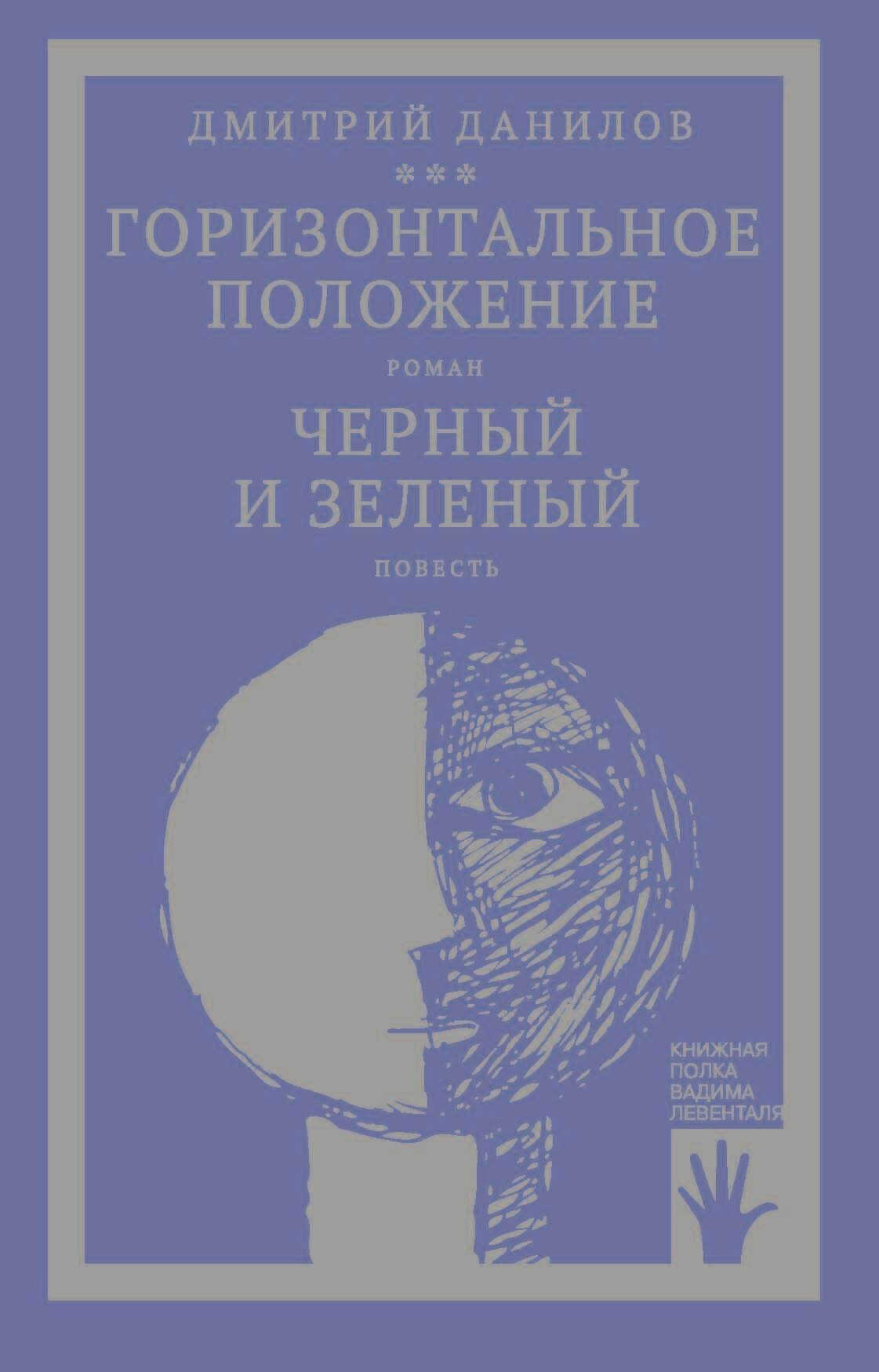
» » » » Филипп Дженкинс - Войны за Бога. Насилие в Библии

Филипп Дженкинс - Войны за Бога. Насилие в Библии

На нашем литературном портале можно бесплатно читать книгу Филипп Дженкинс - Войны за Бога. Насилие в Библии, Филипп Дженкинс . Жанр: Религия. Онлайн библиотека дает возможность прочитать весь текст и даже без регистрации и СМС подтверждения на нашем литературном портале litmir.org.
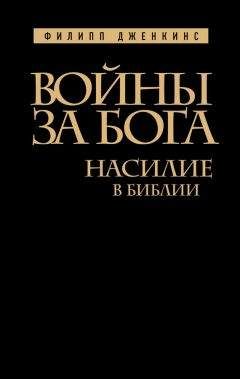
Филипп Дженкинс - Войны за Бога. Насилие в Библии
Название: Войны за Бога. Насилие в Библии
ISBN: нет данных
Год: неизвестен
Дата добавления: 6 август 2019
Количество просмотров: 211
Читать онлайн

Внимание! Книга может содержать контент только для совершеннолетних. Для несовершеннолетних просмотр данного контента СТРОГО ЗАПРЕЩЕН! Если в книге присутствует наличие пропаганды ЛГБТ и другого, запрещенного контента - просьба написать на почту readbookfedya@gmail.com для удаления материала

Войны за Бога. Насилие в Библии читать книгу онлайн

Войны за Бога. Насилие в Библии - читать бесплатно онлайн , автор Филипп Дженкинс
Захватнические войны, беспощадные расправы над невинными, расовая дискриминация и геноцид во имя Бога – хватит ли современному читателю Библии душевных сил, чтобы постичь смысл всех кровожадных историй Священного Писания? Почему многие верующие упорно игнорируют, стремятся предать забвению или утешаются надуманными объяснениями трудных мест Библии? Как повлияли жестокие тексты Библии на ход истории? К каким шокирующим выводам мы придем, добросовестно сравнив Библию и Коран? Что делать с Библией такой, какая она есть, сегодня? Автор этой провокационной и очень своевременной книги о насилии в священных традициях иудаизма, христианства и ислама бросает вызов всем нашим представлениям о религии, кровопролитии и терроре. Перевод: Михаил Завалов
1 ... 55 56 57 58 59 ... 61 ВПЕРЕД
Перейти на страницу:
Конец ознакомительного фрагментаКупить книгу

Ознакомительная версия. Доступно 10 страниц из 61

{95}Сравни James C. Scott, The Art of Not Being Governed (New Haven, CT: Yale Univ. Press, 2009).

{96}Marcus, The View from Nebo; Dever, Who Were the Early Israelites?; Yehezkel Kaufmann, The Biblical Account of the Conquest of Canaan, 2nd ed. (Jerusalem: Magnes Press, Hebrew Univ., 1985); Hershel Shanks, William G. Dever, Baruch Halpern, and P. Kyle McCarter, The Rise of Ancient Israel (Washington, DC: Biblical Archaeological Society, 1992); Dever, What Did the Biblical Writers Know? 108–25. О языковой идентичности см. Seth L. Sanders, The Invention of Hebrew (Urbana: Univ. of Illinois Press, 2009); «Earliest Known Hebrew Text In Proto-Canaanite Script Discovered In Area Where David Slew Goliath», Science Daily , Nov. 3, 2008, на сайте http://www.sciencedaily.com/releases/2008/11/081103091035.htm. Еврейский назван «языком Ханаана» в Ис 19:18.

{97}Johannes C. De Moor, The Rise of Yahwism, 2nd ed. (Leuven, Belgium: Uitgeverij Peeters, 1997); John Day, Yahweh and the Gods and Goddesses of Canaan (Sheffield, England: Sheffield Academic Press, 2000).

{98}Judith M. Hadley, The Cult of Asherah in Ancient Israel and Judah (New York: Cambridge Univ. Press, 2000); Beth Alpert Nakhai, Archaeology and the Religions of Canaan and Israel (Boston, MA: American Schools of Oriental Research, 2001); William G. Dever, Did God Have a Wife? (Grand Rapids, MI: Eerdmans, 2005); Baruch Halpern, From Gods to God (Tubingen, Germany: Mohr Siebeck, 2009), 57–131; Francesca Stavrakopoulou and John Barton, eds., Religious Diversity in Ancient Israel and Judah (New York: Continuum, 2010).

{99}Halpern, From Gods to God; Baruch Halpern, David’s Secret Demons (Grand Rapids, MI: Eerdmans, 2001); Kari Latvus, God, Anger and Ideology (Sheffield, England: Sheffield Academic Press, 1998).

{100} Lester L. Grabbe, ed., Like a Bird in a Cage (London: Sheffield Academic Press, 2003); Cynthia R. Chapman, The Gendered Language of Warfare in the Israelite-Assyrian Encounter (Winona Lake, IN: Eisenbrauns, 2004); Paul S. Evans, The Invasion of Sennacherib in the Book of Kings (Leiden, Netherlands: Brill, 2009).

{101} Halpern, From Gods to God, 57–131; Weinfeld, Deuteronomy 1–11, находит параллели между Второзаконием и языком тогдашних ассирийских царей.

{102} Jack Miles, God: A Biography (New York: Alfred A Knopf, 1995), 117–18, 154–59.

{103} Цитата из Втор 7:23; о шершнях см. Исх 23:27–29; Втор 7:19–23; Ис Нав 24:12. Norman C. Habel, The Land Is Mine (Minneapolis: Fortress Press, 1995); Weinfeld, The Promise of the Land, 85–87.

{104} Быт 15:16.

{105} Втор 9:4.

{106} Лев 18:24–25. Brueggemann, Divine Presence amid Violence .

{107} Втор 32: «Очистит землю…» – ст. 43; «ужас» – ст. 25.

{108} Thomas R. Neufeld, Put on the Armour of God (Sheffield, England: Sheffield Academic Press, 1997); Мих 4:13.

{109} Moshe Weinfeld, The Promise of the Land, 91; Megan Bishop Moore, «Fighting in Writing», in Brad E. Kelle and Frank Ritchel Ames, eds., Writing and Reading War (Leiden, Netherlands: Brill, 2008), 57–66; Michael G. Hasel, «Assyrian Military Practices and Deuteronomy’s Laws of Warfare», in Kelle and Ritchel Ames, eds., Writing and Reading War, 67–81.

{110} Втор 13: 6–16.

{111} 4 Цар 23:5, 12, 20, 25.

{112} Dennis T. Olson, Numbers (Louisville, KY: John Knox Press, 1996), 152–56; Baruch A. Levine, Numbers 21–36 (New York: Doubleday, 2000), 277–303.

{113} Об Ездре и Неемии см. Charles Fensham, The Books of Ezra and Nehemiah (Grand Rapids, MI: Eerdmans, 1983); H. G. M. Williamson, Ezra-Nehemiah, vol. 16 in Word Biblical Commentary (Nashville, TN: Thomas Nelson, 1985); Matthew Levering, Ezra and Nehemiah (Brazos Press, 2007); Mark J. Boda and Paul L. Redditt, Unity and Disunity in Ezra-Nehemiah (Sheffield, England: Sheffield Phoenix Press, 2008); Joseph Blenkinsopp, Judaism, The First Phase (Grand Rapids, MI: Eerdmans, 2009).

{114} Ездр 9:1–2.

{115} Неем 13:30 (NRSV). Rainer Albertz and Bob Becking, eds., Yahwism After the Exile (Assen, Netherlands: Royal Van Gorcum, 2003); Gary N. Knoppers, Lester L. Grabbe, and Deirdre N. Fulton, eds., Exile and Restoration Revisited (London: T&T Clark, 2009).

3

{116} В данной главе я пользовался энциклопедией Jane Dammen McAuliffe, ed., Encyclopaedia of the Qur’an, 5 vols. (Leiden, Netherlands: Brill, 2001–2005); Jane Dammen McAuliffe, ed., The Cambridge Companion to the Qur’an (New York: Cambridge Univ. Press, 2006); Andrew Rippin, ed., The Blackwell Companion to the Qur’an (Malden, MA: Blackwell, 2006). См. также Brian A. Brown, Noah’s Other Son (New York: Continuum, 2007). Относительно традиции комментариев см. Feras Hamza and Sajjad Rizvi, eds., An Anthology of Qur’anic Commentaries (New York: Oxford Univ. Press, 2008), vol. 1.

{117} См., например, Robert Wright, «The Meaning of the Koran», New York Times , September 14, 2010, на сайте http://opinionator.blogs.nytimes.com/2010/09/14/the-meaning-of-the-koran/. Я решительно не могу согласиться с выводами некоторых исследователей последних лет о связи ислама с насилием, включая те, что представлены в двух следующих работах: Robert Spencer, Islam Unveiled (San Francisco: Encounter Books, 2002); Richard L. Rubenstein, Jihad and Genocide (Lanham, MD: Rowman & Littlefield, 2010).

{118} Jack Nelson-Pallmeyer, Is Religion Killing Us? (Harrisburg, PA: Trinity Press International, 2003); J. Harold Ellens, ed., The Destructive Power of Religion (Westport, CT: Praeger, 2004); R. Joseph Hoffmann, ed., The Just War and Jihad (Amherst, NY: Prometheus Books, 2006); Gabriel Said Reynolds, ed., The Qur’an in Its Historical Context (New York: Routledge, 2008). О насилии в других религиозных традициях см., например, Michael K. Jerryson and Mark Juergensmeyer, eds., Buddhist Warfare (New York: Oxford Univ. Press, 2010).

{119} David Marshall, God, Muhammad and the Unbelievers (Richmond, England: Curzon, 1999).

{120} Фильм «Фитна» можно найти в Сети, например, на сайте http://www.break.com/usercontent/2009/2/Fitna-Documentary-about-Islam – 660675.html.

{121} Richard Bonney, Jihad (New York: Palgrave Macmillan, 2004); David Cook, Understanding Jihad (Berkeley: Univ. of California Press, 2005); R. Joseph Hoffmann, ed., The Just War and Jihad (Amherst, NY: Prometheus Books, 2006).

{122} Данный отрывок также постоянно цитируется на антимусульманских сайтах, см., например, http://muhammadsquran.blogspot.com/2009/03/at-taubah-95-verse-of-sword. html.

{123} Коран 47:4.

{124} Коран 17:16.

{125} Мф 13:37–42.

{126} Michael Cook, The Koran: A Very Short Introduction (New York: Oxford Univ. Press, 2000), 33–36; Abdullah Saeed, Interpreting the Qur’an (New York: Routledge, 2006).

{127} Мф 5:18.

{128} Если бы «сатанинские стихи» не были удалены, они бы следовали за сурой 53:19–20. «Аллах стирает…» – Коран 22:52.

{129} Andrew Rippin, The Qur’an and Its Interpretative Tradition (Burlington VT: Ashgate/Variorum, 2001).

{130} Mohamed A. Mahmoud, Quest for Divinity (Syracuse, NY: Syracuse Univ. Press, 2007); Nasr Abu Zaid, Rethinking the Qur’an (Utrecht, Netherlands: Humanistics Univ. Press, 2004); Nasr Abu Zaid with Esther R. Nelson, Voice of an Exile (New York: Praeger, 2004); Hussein Abdul-Raof, Schools of Qur’anic Exegesis (New York: Routledge, 2010).

{131} О реформистской традиции – см., например, Charles Kurzman, Modernist Islam, 1840–1940 (New York: Oxford Univ. Press, 2002); Michaelle Browers and Charles Kurzman, eds., An Islamic Reformation? (Lanham, MD: Lexington Books, 2004); Suha Taji-Farouki, ed., Modern Muslim Intellectuals and the Qur’an (New York: Oxford Univ. Press, 2004); Massimo Campanini, The Qur’an (New York: Routledge, 2010).

{132} Andrew G. Bostom, The Legacy of Islamic Antisemitism, reprint ed. (Amherst, NY: Prometheus Books, 2008).

{133} Сравни Spencer, Islam Unveiled; Robert Spencer, ed., The Myth of Islamic Tolerance (Amherst, NY: Prometheus Books, 2005). Martin Gilbert, In Ishmael’s House (New Haven, CT: Yale Univ. Press, 2010), дает научную картину жизни евреев в арабских странах.

{134} Sahih Bukhari, book 041, no. 6985. См., например, http://www.muslimaccess.com/sunnah/hadeeth/muslim/041.html.

{135} «The Covenant of the Islamic Resistance Movement», 1988, на сайте http://avalon.law.yale.edu/20th_century/hamas. asp.

{136} О взаимоотношениях Мухаммеда с евреями Медины см. Michael Lecker, «Glimpses of Muhammad’s Medinan Decade», in Jonathan E. Brockopp, ed., The Cambridge Companion to Muhammad (Cambridge: Cambridge Univ. Press, 2010), 61–79. О 523 убийствах см. Irfan Shahid, The Martyrs of Najran (Brussels, Belgium: Societe des Bollandistes, 1971); сравни Gerard Garitte, ed., La Prise de Jerusalem par les Perses en 614 (Louvain, Belgium: Secretariat du CorpusSCO, 1960).

{137} Коран 5:82.

{138} Ibn Warraq, What the Koran Really Says (Amherst, NY: Prometheus Books, 2002) and Ibn Warraq, Which Koran? (Prometheus Books, 2009); Reynolds, ed., The Qur’an in Its Historical Context; Philip Jenkins, The Lost History of Christianity (San Francisco: HarperOne, 2008); Fred M. Donner, Muhammad and the Believers (Cambridge, MA: Belknap Press, 2010).

{139} Коран 2:61–62.

{140} Коран 3:112.

{141} Коран 4:54–55.

{142} Коран 2:61–66; Cook, The Koran, 97–100. Сравни Коран 7:163–66, где также за нарушением субботы следует превращение.

{143} Ин 8:44, Лк 11:50.

{144} Якобы Коран 4:55.

{145} Якобы Коран 33:26.

{146} Якобы Коран 2:96.

{147} Якобы Коран 59:14.

{148} Коран 2:256. Thomas Sizgorich, Violence and Belief in Late Antiquity (Philadelphia: Univ. of Pennsylvania Press, 2009).

4

{149} Пс 77:55.

{150} Пс 104:44.

{151} Пс 135:18–21.

{152} Неем 9:22–24.

{153} Charles Kannengiesser, ed., Handbook of Patristic Exegesis (Leiden, Netherlands: Brill, 2006); Steve Moyise, Evoking Scripture (London: T&T Clark, 2008).

{154} Alois Grillmeier, From the Apostolic Age to Chalcedon, vol. 1 in Christ in the Christian Tradition, rev. ed., trans. John Bowden (Louisville, KY: Westminster John Knox, 1975); Raymond E. Brown, An Introduction to New Testament Christology (Mahwah, NJ: Paulist Press, 1994); Richard N. Longenecker, Biblical Exegesis in the Apostolic Period, 2nd ed. (Grand Rapids, MI: Eerdmans, 1999); John J. O’Keefe and R. R. Reno, Sanctified Vision (Baltimore: Johns Hopkins Univ. Press, 2005); J. Levison and P. Pope-Levison, «Christology», in William A. Dyrness and Veli-Matti Karkkainen, eds., Global Dictionary of Theology (Downers Grove, IL: InterVarsity Press, 2008), 167–86.

{155} Maarten J. J. Menken and Steve Moyise, eds., Deuteronomy in the New Testament (London; New York: T&T Clark, 2007).

{156} Среди многих патристических текстов см. Michael Slusser, ed., Dialogue with Trypho by St. Justin Martyr (Washington, DC: Catholic Univ. of America Press, 2003).

{157} Robert C. Hill, ed., The Questions on the Octateuch by Theodoret of Cyrus, 2 vols. (Washington, DC: Catholic Univ. of America Press, 2007), vol. 2, 262–63.

{158} «Истребив семь народов…» – Деян 13:19; слова Стефана – Деян 7:45. Раав в Новом Завете – см. Евр 11:30–32; Иак 2:24–26.

{159} Hill, ed., Questions on the Octateuch, vol. 1, 223, об Амалеке; vol. 2, 285, откуда приведена цитата.

{160} Eric A. Seibert, Disturbing Divine Behavior (Minneapolis: Fortress Press, 2009), 71–77, называет два этих типа аргументации, соответственно, «Божья неприкосновенность» и «правое дело».

{161} Рим 9:21–23. Типичное использование такого аргумента см. Irenaeus, «Against Heresies», chap. xxix, на сайте http://www.ccel.org/ccel/schaff/anf01.ix.vi.xxx.html. Образ Бога как горшечника взят из главы 18 Книги пророка Иеремии, хотя достойно внимания то, что в данном отрывке Бог не поступает по произволу или капризам: он судит и сокрушает народы из-за грехов, которые они совершают.

{162} Roland Teske, ed., Answer to Faustus, a Manichaean (Hyde Park, NY: New City Press, 2007).

{163} Augustine, «Contra Faustum», book xxii, на сайте http://www.newadvent.org/fathers/140622.htm.

{164} Augustine, «Contra Faustum», book xxii, at http://www.newadvent.org/fathers/140622.htm.

Ознакомительная версия. Доступно 10 страниц из 61

1 ... 55 56 57 58 59 ... 61 ВПЕРЕД
Перейти на страницу:
Комментариев (0)